

Short answer: a night guard needs more attention than a daytime retainer, not less. It sits in your mouth for 7 to 8 hours while saliva flow naturally drops during sleep, which is exactly the warm, low-flow environment bacteria multiply fastest in. Rinse it the moment you take it out, brush it with a soft brush and mild soap, and soak it properly a few times a week, not just when it starts to smell.
Your night guard works the graveyard shift
Every other appliance in this cleaning-routine conversation gets some daylight hours off. A retainer comes out to eat. A mouthguard comes out at full time. A night guard clocks in right as your body's natural defences clock out: saliva, which does a genuinely good job of rinsing your mouth during the day, slows right down while you sleep.
That's not a minor detail. The human mouth hosts over 700 bacterial species, and a guard sitting in reduced saliva flow for 7 to 8 hours gives them a warm, dark, undisturbed shift to get on with it. A biofilm can start forming within a few hours of wear, not days. By the time you notice a smell, it's had all night to build.
What's actually growing in there
The bacteria most commonly named in guard biofilm include Streptococcus mutans and Staphylococcus aureus, plus Candida albicans, the fungus behind oral thrush. None of that is cause for panic; it's cause for a routine. The guard isn't doing anything wrong by existing. It just needs the same daily attention you'd give anything that spends a third of every day in a warm, damp, enclosed space.

The routine built for the overnight shift
- Rinse immediately on waking. Cool or lukewarm water, straight away, not after breakfast, not after your shower. The sooner the film gets disturbed, the less it has to build on.
- Brush gently, daily. A soft brush and mild soap, never regular toothpaste. It's abrasive enough to scratch the surface and give bacteria more places to hide.
- Soak properly, several times a week. A rinse removes what's loose. A proper 5 to 20 minute soak reaches what's actually attached.
- Dry the case, not just the guard. A case that stays damp all day is just a second overnight shift waiting to happen.
What actually does the cleaning
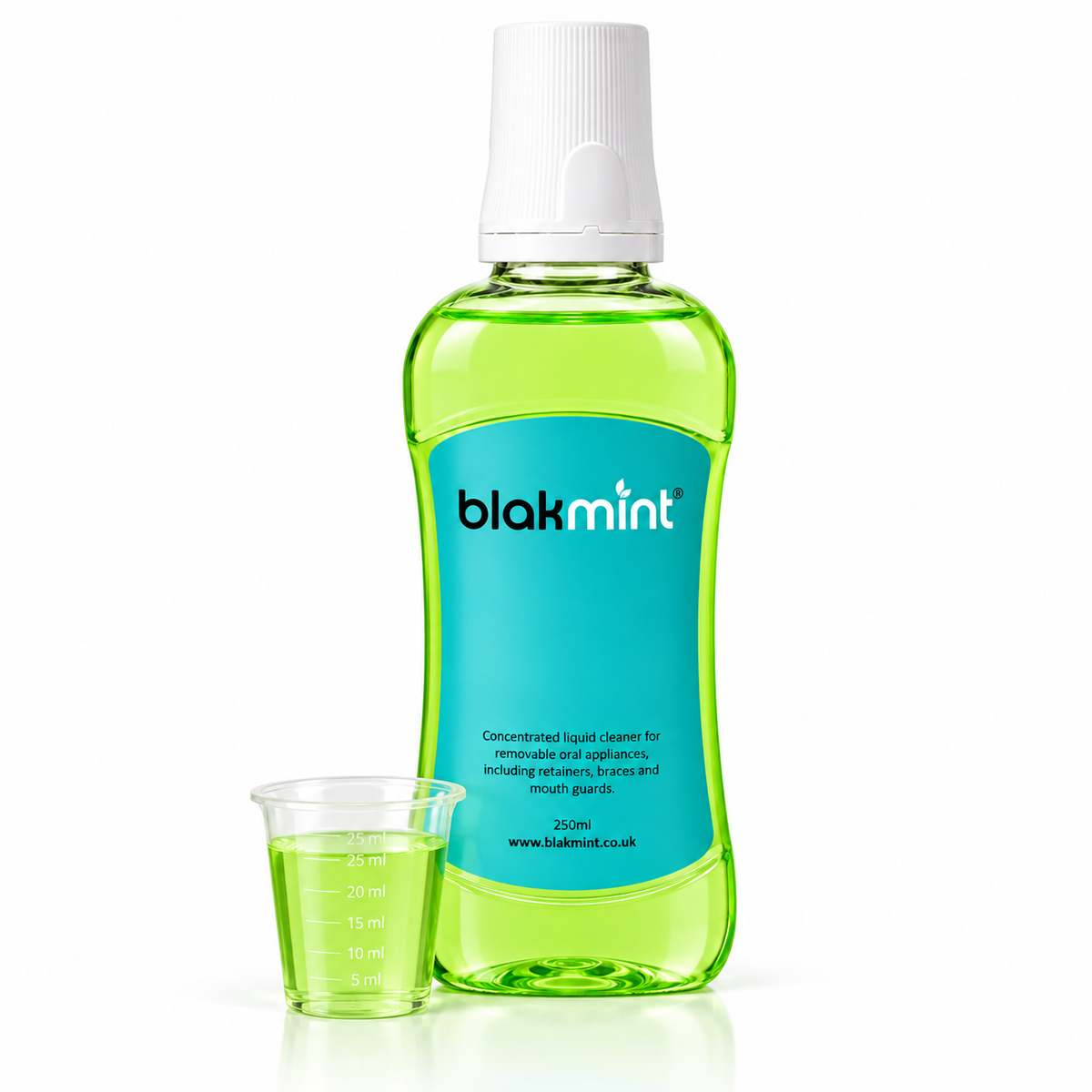
Blakmint's liquid cleaner was tested under ASTM E2315, the lab standard for measuring bacterial reduction on an appliance surface, against a mixed inoculum of four real bacteria strains: Pseudomonas aeruginosa, E coli, Staphylococcus aureus and E hirae. At a 20-minute soak, the result was a 99.99% reduction, the number printed on the bottle.
It's persulfate free too. Most mainstream cleaning tablets list persulfate allergy as a known reaction risk on their own packaging, which matters more for something worn for a third of every day than for an occasional-use appliance.

When it's not a cleaning problem
- A guard that's gone soft, warped, or doesn't seat properly anymore. Usually heat damage (hot water, a hot car) or just age; no soak reverses that.
- Jaw pain or soreness that doesn't improve. That's a fit or bruxism-severity issue for your dentist, not a hygiene one.
- A smell that returns within hours of cleaning. Worth asking your dentist whether the guard itself needs replacing.
Frequently asked
-
Is a night guard really dirtier than a daytime retainer?
Per hour of wear, yes. The combination of long wear time and reduced overnight saliva flow creates conditions that build biofilm faster than daytime wear typically does. -
Can I just rinse it and skip the soak some nights?
Rinsing removes loose debris, but it doesn't reach attached biofilm. A few proper soaks a week is the minimum, not a nice-to-have. -
Is it safe to use the same cleaner on a night guard and a retainer?
Yes, as long as the cleaner is stated safe for the material. Blakmint's liquid works across retainers, dentures, night guards and mouthguards alike. -
Why does my case smell even when the guard itself looks clean?
Cases trap moisture just as well as the guard does. Rinse and air-dry the case itself, not only what's inside it.
The Blakmint liquid cleaner is £14 for up to 5 months of use, persulfate free, ultrasonic-safe, and works on night guards, retainers, dentures and mouthguards alike.
Wear a sports mouthguard instead? Read Mouthguard Cleaner for Athletes, or for the full appliance range, Why Liquid Beats Tablets.